 Reviews



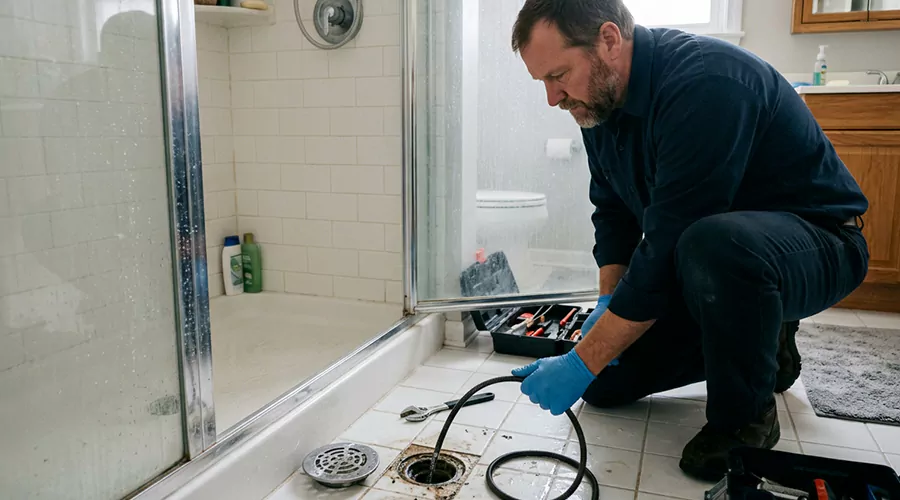
A shower drain usually smells because organic buildup is feeding bacteria or because the P-trap has lost its water seal. A persistent sewer-like odor can also point to a venting or drainage problem. Professional drain cleaning costs $147 to $352 in 2026.
The supplied keyword stinky shower drain has 5,000 average monthly searches. The type of odor matters because a musty smell often points toward buildup while a sewer-gas smell can indicate a lost trap seal or deeper plumbing condition.
What Causes a Shower Drain to Smell?
A shower drain can smell when hair and soap residue collect inside the pipe. The damp organic material supports bacterial growth. A dry P-trap can create a different odor because the missing water barrier allows gases from the drainage system to move upward.
- Another possibility is mold or biofilm near the drain opening.
- A partial clog can trap dirty water.
- A venting issue can disturb the trap seal.
- A damaged drain connection can create persistent odor.
The cause should be diagnosed before masking the smell with fragrance. Odor is information.
What Does the Type of Smell Tell You?
Different odor patterns can help narrow the source. A musty smell often comes from damp buildup near the drain. Rotten-egg or sewage-like odors deserve closer attention because the drain's water seal may no longer be blocking sewer gas.
| Smell | Likely Cause | First Check | 2026 Cost Exposure |
|---|---|---|---|
| Musty | Biofilm or organic buildup | Clean drain opening | Often DIY |
| Sour | Hair and soap residue | Check for clog | Often DIY |
| Rotten egg | Dry trap or drain issue | Check trap water | $147 to $352 if cleaning is needed |
| Raw sewage | Vent or drainage problem | Check other fixtures | Can exceed routine cleaning |
Current 2026 odor guidance links musty smells with biofilm and sewer-like smells with trap or vent problems. The smell should therefore guide your first inspection.
How Does Odor Buildup Progress?
A smelly shower drain can begin with a thin film of residue. Hair catches more material and keeps the inside of the drain damp. Bacteria then break down trapped organic matter and produce stronger odors.
- Early buildup may smell only after a hot shower.
- The odor can later remain between uses.
- Slow drainage may develop at the same time.
- A dense clog can eventually leave standing water.
- The problem then shifts from odor alone to restricted flow.
The keyword stinky drain fits this wider drain-odor symptom. Cleaning early is easier because the material is still close to the opening.
What Warning Signs Suggest More Than Surface Buildup?
An odor that remains after cleaning can indicate a deeper cause. Sewer smells combined with gurgling or backup deserve more attention than a mild musty odor directly beneath a dirty drain cover.
- The smell resembles sewage.
- The drain gurgles frequently.
- Water drains more slowly than before.
- Another bathroom drain smells at the same time.
- The odor returns immediately after cleaning.
- The shower has not been used for weeks.
- The smell changes when another fixture drains.
- Dirty water comes back through the drain.
- Visible slime coats the drain opening.
- The smell remains after restoring water to the trap.
Persistent sewer odor may point toward venting or plumbing issues rather than simple surface contamination. That distinction determines whether cleaning alone can solve the problem.
What Is Biofilm in a Shower Drain?
Biofilm is a slimy layer created when microorganisms grow on wet organic residue. Hair and soap residue can provide material for that layer inside a shower drain. The result can be a musty or sour smell even when water still drains normally.
- Remove the drain cover.
- Look at the underside.
- Inspect the upper drain wall.
- A slippery coating can indicate buildup.
- Use a drain brush where accessible.
- Remove visible hair.
- Clean the cover before reinstalling it.
The supplied keyword clean shower drain applies directly to this maintenance step. Cleaning the physical surface matters because fragrance products do not remove the material creating the odor.
Can a Dry P-Trap Cause Sewer Smell?
Yes. The P-trap holds water below the drain to create a barrier between the bathroom and the drainage system. When an unused shower sits long enough the water can evaporate. Sewer gas can then move through the empty trap.
- Think about how often the shower is used.
- A guest bathroom is more likely to develop a dry trap.
- Run water for a short period.
- Wait to see whether the smell fades.
If the odor disappears after the trap refills, evaporation was a strong clue. If the smell returns quickly, another condition may be disturbing or draining the water seal. A frequently used shower should not normally have a persistently dry trap.
Can a Clogged Shower Drain Smell Bad?
Yes. Hair and soap buildup can trap organic material inside the drain. Bacteria can then act on that material and create unpleasant odor. A clogged drain often adds slow water flow to the smell.
- Run the shower briefly.
- Watch the drain speed.
- Look for water pooling around the grate.
- Remove visible hair.
- Check whether the smell improves after the blockage is cleared.
A shower drain clogged with organic material can therefore create both odor and standing water. Treat the physical obstruction before trying to mask the smell.
How Do You Clean a Smelly Shower Drain?
Start by physically cleaning the accessible drain area. Remove hair and residue because they can hold moisture and support continued odor even after liquid cleaners pass through.
- Wear gloves.
- Remove the grate.
- Pull out visible hair.
- Scrub the underside of the cover.
- Use a narrow drain brush where accessible.
- Rinse the cleaned surfaces with hot tap water.
- Test the smell after the area dries.
Mechanical cleaning targets the material closest to the bathroom. This is useful when the odor is musty rather than clearly sewer-like. Current 2026 odor guidance identifies hair and biofilm removal as common first steps.
Should You Use Baking Soda and Vinegar?
Some current household drain guides include baking soda and vinegar as a cleaning option for light residue. Physical scrubbing and hair removal remain important because fizzing liquid does not pull a dense hair mass from the pipe.
- Never mix household mixtures with commercial drain chemicals.
- Do not add bleach to unknown drain products.
- Read every cleaner label.
- Use ventilation during cleaning.
- Wear eye protection when handling stronger products.
If a commercial chemical has already been added, avoid experimenting with another substance. The goal is to remove the source safely rather than create a stronger reaction inside the pipe.
How Can You Test for a Dry Trap?
A simple water test can help identify a shower that has not been used recently. Run clean water into the drain long enough to refill the P-trap. Then leave the bathroom and check the odor later.
- Run water for about one minute.
- Stop the shower.
- Allow the room air to clear.
- Check the smell later.
- Repeat the observation the next day.
If the odor disappears and stays away, the trap may simply have been dry. If sewer smell returns quickly, another problem may be affecting the water seal. This test is especially useful in guest bathrooms.
Can a Plumbing Vent Cause the Smell?
Yes. Plumbing vents help balance pressure in the drainage system. A venting problem can contribute to trap-seal loss when pressure changes pull water out of the trap. A missing water barrier can then allow drainage-system odors into the room.
- Listen for gurgling.
- Observe whether another fixture affects the shower drain.
- Notice whether the water level changes unexpectedly.
- Check whether several drains smell.
- Do not attempt roof-vent work without appropriate access and safety.
Persistent odor tied to other fixture use is more concerning than odor limited to visible shower buildup. Current 2026 drain-odor guidance identifies ventilation problems as one possible cause of persistent sewer odor.
When Should You Call a Professional?
Professional diagnosis makes sense when the shower smells like sewage after the drain has been cleaned and the trap has been refilled. Multiple affected drains or wastewater backup also indicate that the issue may extend beyond routine cleaning.
Professional drain cleaning costs about $147 to $352 in 2026. The national average is approximately $246.
Professional evaluation is appropriate when:
- Sewer smell persists after trap refill.
- Several drains smell at once.
- Gurgling occurs throughout the bathroom.
- Wastewater backs into the shower.
- Drain cleaning does not remove the odor.
- The trap appears to lose water repeatedly.
A deeper line blockage costs more when main sewer work is required. Current 2026 main-line clog repair averages about $380.
How Can You Prevent Shower Drain Odors?
Regular hair removal prevents organic material from sitting inside the drain for long periods. Frequently used showers normally keep the trap filled automatically. Unused showers need occasional water to maintain the trap seal.
- Clean the hair catcher regularly.
- Wash the drain cover.
- Remove visible buildup.
- Run water in unused showers.
- Respond to slow drainage early.
- Investigate recurring sewer odor.
Current 2026 shower-drain guidance recommends regular cleaning and periodically running water in unused showers to reduce odor problems. Prevention is inexpensive compared with professional drain cleaning.
Conclusion
When asking why does my shower drain smell, start by identifying the odor. A musty smell usually points toward buildup close to the drain while a sewer-like smell can indicate a dry P-trap or deeper drainage problem. Remove hair and clean visible biofilm first. Refill the trap in unused showers. If sewer odor persists or several fixtures are affected, professional diagnosis can identify a vent or drainage issue.
Frequently Asked Questions
Why does my shower drain smell only after a shower?
Hot water and moving air can make odor from existing biofilm more noticeable. Inspect the upper drain for buildup.
Why does an unused shower smell like sewage?
The P-trap can lose water through evaporation. Running water can restore the barrier when evaporation is the cause.
Can hair make a drain smell?
Yes. Hair can hold soap residue and organic material inside the drain where bacteria can grow.
Why does the smell return after cleaning?
The source may be deeper than the drain opening or the P-trap may be losing its water seal.
Is sewer smell from a shower drain normal?
No. A working water-filled trap should block normal sewer gas from entering through the drain.